Notes on importing
Practical guidance on containers, landed cost, and the paperwork between a purchase order and a payment.
 landed-cost
How to find your HTS code and duty rate before you place the order
Duty is the one landed-cost line you cannot estimate until the product is classified. How to read an HTS number, use the tariff, and when to ask for a ruling.
 landed-cost
Proforma vs commercial invoice: what each one is for, and which one customs uses
The proforma sets your deposit and your landed-cost estimate. The commercial invoice sets customs value and the final payable. Reconcile the two.
 container-importing
FCL vs LCL: how each is priced and where the break-even actually falls
LCL is billed per cubic meter or per 1,000 kg, whichever is higher; FCL is a flat rate. Where the two cross, and why the real break-even comes earlier.
 operations
Six signs your import business has outgrown spreadsheets
Six operational signs the spreadsheet is costing money: a missed free-time date, a supplier paid twice, a landed cost nobody trusts, and what fixes each.
 container-importing
ISF 10+2: what an importer must file before the ship sails, and what a late filing costs
The ISF is due 24 hours before your container is loaded at the foreign port, not when it arrives. The ten data elements, who files, and what late filing costs.
 container-importing
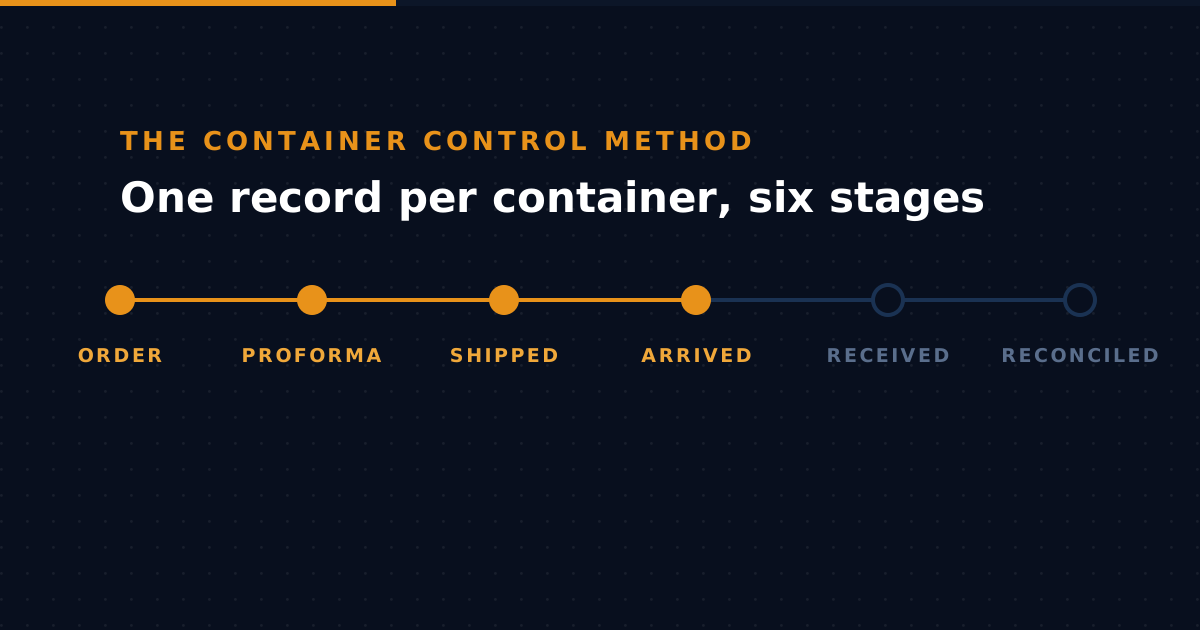
The Container Control Method: six stages that keep an import from drifting
A six-stage method for running an import container: Order, Proforma, Shipped, Arrived, Received, Reconciled — with the document and the number that prove each stage.
 landed-cost
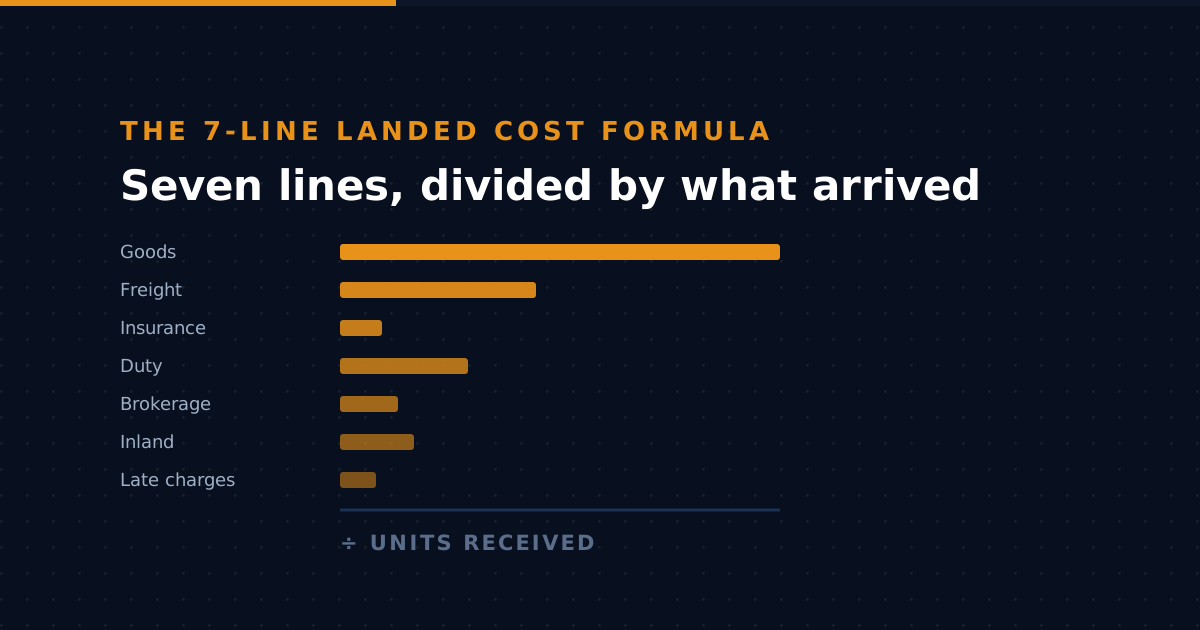
The 7-Line Landed Cost Formula: what an imported unit actually costs you
Seven lines that turn a supplier price into a true per-unit landed cost: goods, freight, insurance, duty, brokerage, inland, and late charges — divided by units received.
 container-importing
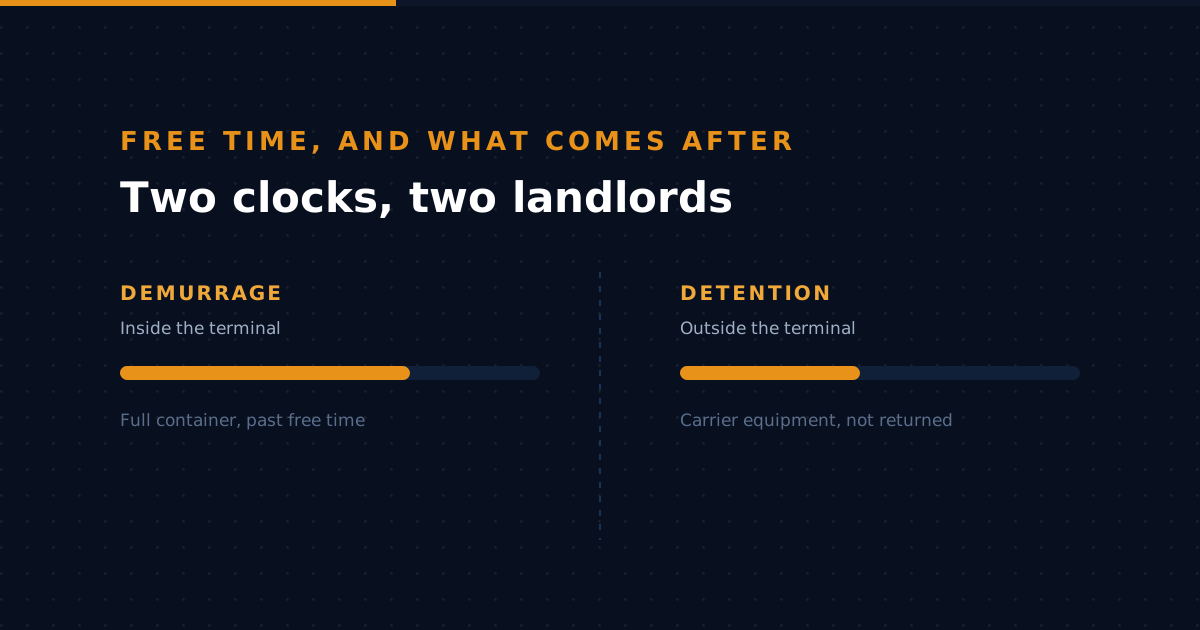
Demurrage vs detention: what each one charges for and how to avoid both
Demurrage is charged for a full container left at the terminal past free time. Detention is charged for carrier equipment kept outside the port. How each accrues, and how to stop them.