Demurrage vs detention: what each one charges for and how to avoid both
Demurrage is charged for a full container left at the terminal past free time. Detention is charged for carrier equipment kept outside the port. How each accrues, and how to stop them.
Short answer: Demurrage is charged by the terminal for a full container left inside the port past its free time. Detention is charged by the carrier for its equipment — usually the chassis or the empty container — kept outside the port past free time.
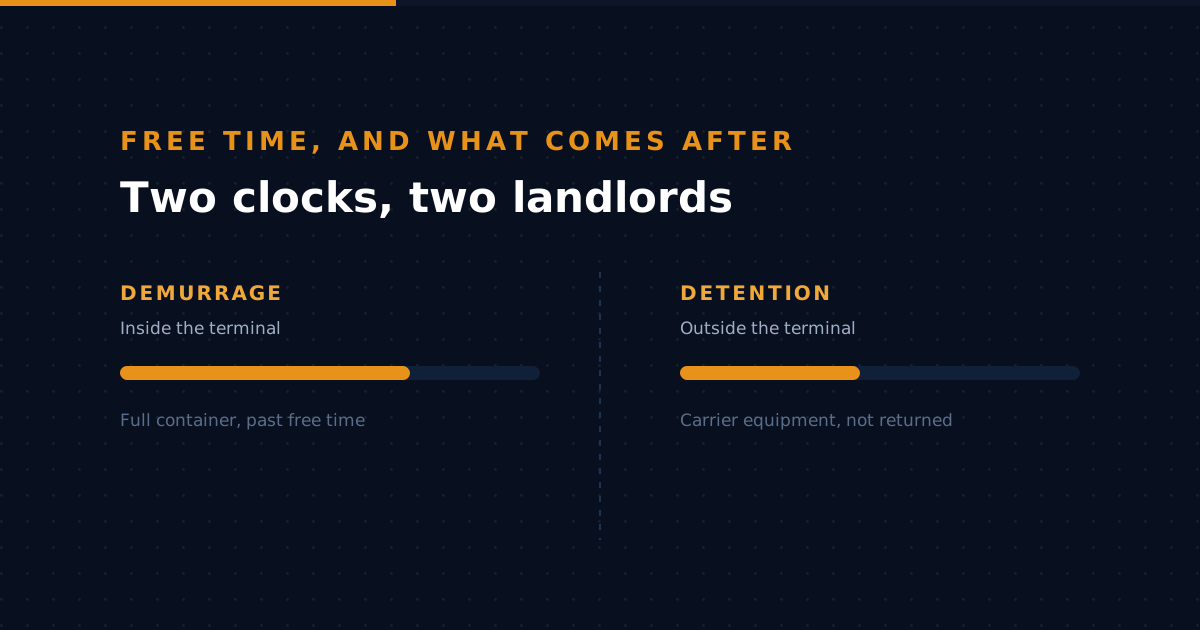
Demurrage is charged by the terminal for a full container left inside the port past its free time. Detention is charged by the carrier for its equipment — the chassis, or the container itself once emptied — kept outside the port past free time. They are billed by different parties for different things, and a single container can incur both in the same week.
Why it matters: both accrue daily, per container, and neither appears in your landed cost estimate at the time you commit to the order.
What each charge is actually for
The distinction is about location and ownership. Demurrage is rent on space inside the terminal. Detention is rent on equipment outside it.
| Demurrage | Detention | |
|---|---|---|
| Billed by | Marine terminal, via the carrier | Ocean carrier |
| Covers | Full container occupying terminal space | Carrier equipment held outside the terminal |
| Clock starts | When the container is discharged and available | When the container leaves the terminal |
| Clock stops | When the container is picked up | When the empty and chassis are returned |
| Typical free time | 3–5 calendar days | 3–5 business days |
| Typical daily rate | Rises in tiers, often $100–$300+ per day | Often $50–$150 per day |
Rates and free days are set in each carrier's published tariff and vary by port, so treat the figures above as the shape of the problem rather than a quote for your lane.
When the clock actually starts
This is where most disputed invoices begin. In most US import cases free time runs from the moment the container is discharged from the vessel and made available for pickup — not from vessel berthing, and not from the day you were notified. A container discharged on a Friday afternoon can consume a weekend of free time before anyone could realistically collect it.
Four details change the calculation, and all four are worth confirming in writing at booking rather than discovering on an invoice:
- Whether free time counts calendar days or business days — the difference is often two days over a weekend.
- Whether the clock pauses when the terminal has no appointment available, which varies by carrier and port.
- Whether weekends and holidays are excluded from the count at that specific terminal.
- Whether demurrage is tiered, so day four costs materially more than day one.
Why free time differs between two ports on the same coast
Free time is not an industry standard. It is a commercial term in your carrier's tariff, and it varies by port, by trade lane, and by contract. An importer running the same product into two US ports through the same carrier can hold three free days at one and five at the other, which is why a habit built around "we usually have about a week" eventually produces an invoice.
Volume matters too. Free time is negotiable on a service contract, and importers moving predictable monthly volume can often secure additional days at the ports they use most. It is worth asking at contract renewal, because an extra two days of free time is cheaper than any amount of expediting once the clock is running.
Who pays, and what a valid invoice must contain
For an import, the party billed is normally the one named on the bill of lading or otherwise holding the container — usually the importer or their agent. A drayage carrier collecting the box is not automatically liable for charges that accrued before pickup.
Since 2024 the Federal Maritime Commission has required demurrage and detention invoices to carry specific information, including the dates the charges cover and a clear explanation of how to dispute them. An invoice missing required content is contestable, and there is a defined window to raise it. That makes record-keeping the practical defence. Keep these on the container file from the day it is discharged:
- The discharge date and time, from the terminal, not from the arrival notice.
- Every appointment attempt, including the ones the terminal refused, with timestamps.
- The date customs released the container, and the date any other agency hold cleared.
- The empty return receipt with its date and time.
- The tariff page stating free time for that carrier and port, saved when you booked.
A dispute you can win is a dispute you documented before you knew you would need it. Once the invoice arrives, reconstructing which day the terminal had no appointment is close to impossible.
What a week of delay actually costs
Illustrative figures for one 40' container held four days past free time at a US Gulf port, with tiered demurrage:
| Day past free time | Demurrage rate | Running total |
|---|---|---|
| Day 1 | $150 | $150 |
| Day 2 | $150 | $300 |
| Day 3 | $250 | $550 |
| Day 4 | $250 | $800 |
Add three days of detention on the chassis at $85 and the container has absorbed $1,055 in charges that did not exist when the purchase order was signed. On a $16,000 shipment that is roughly six percent of the goods value, and it lands entirely in the last stage of the import, after pricing decisions are already made.
Why these charges break landed cost
Demurrage and detention arrive late. The invoice can appear weeks after the container is emptied, closed, and — in most spreadsheets — forgotten. The per-unit cost that the sales team is quoting against was calculated without it.
This is the failure the Container Control Method is built to prevent: a container is not Reconciled until every cost that landed on it is attached to it. A demurrage invoice arriving in week six belongs to the container from week two, not to the month it was received in.
In practice
Track the last free day, not the arrival date. Arrival dates move; the expiry date is the one that costs money, and it belongs on the container record the moment the vessel's schedule is firm.
File the customs entry early enough that the container is releasable on the day it becomes available. A customs entry filed late turns available free time into unusable free time, and the terminal does not care why the box was not collected.
Software that holds costs against a container can attach a late demurrage invoice to the right shipment months after the fact, which is the difference between knowing your per-unit cost and estimating it. But the habit matters more than the tooling: put the free-time expiry on the record, review it daily, and return equipment as soon as it is empty.
Step by step
How to avoid demurrage and detention on an import container
- Confirm free time in writing at booking. Ask the carrier how many free days apply and what event starts the clock. Record both on the container file at the Shipped stage.
- File customs entry before arrival. Have the entry filed and any other agency requirement handled so the container is releasable the day it is discharged, not days later.
- Book drayage against the discharge date. Schedule the pickup appointment as soon as the vessel's arrival is firm, rather than after the container is already available.
- Track the free-time expiry date, not the arrival date. Put the last free day on the container record and review it daily. Arrival dates drift; the expiry date is the number that costs money.
- Return equipment promptly. Unload and return the empty container and chassis within the carrier's free period to stop detention, which continues after the goods are already in your warehouse.
Frequently asked
Is demurrage the same as detention?
No. Demurrage is charged for a container sitting inside the terminal past free time. Detention is charged for the carrier's equipment kept outside the terminal past free time. Both can accrue on the same container in the same week for different reasons.
When does free time start?
In most US import cases the clock starts when the container is discharged from the vessel and made available, not when the vessel berths. The exact trigger is set in your carrier's tariff, so confirm it rather than assuming.
Who pays demurrage, the importer or the trucker?
Usually the party named on the bill of lading or the one who holds the container, which for an import is normally the importer or their agent. A trucker is not automatically liable simply for collecting the box.
Can I dispute a demurrage invoice?
Yes. Under the Federal Maritime Commission's billing rule an invoice must contain specific information for the charge to be valid, and you have a defined window to contest it. Keep the discharge date and every pickup appointment record.
Does demurrage stop if the port is congested?
Not automatically. Some tariffs pause the clock when the terminal cannot offer an appointment, but this varies by carrier and port. Ask for the tariff language in writing before you need it.